Season planning
Best Time to Visit Nepal
The best time to visit Nepal depends on altitude, region, visibility, festivals, wildlife, trekking conditions, and how much flexibility you can build into the route.
- Overall favorites
- October-November
- Spring trekking
- March-April
- Lower regions
- Winter can work well
- Monsoon note
- Plan by region
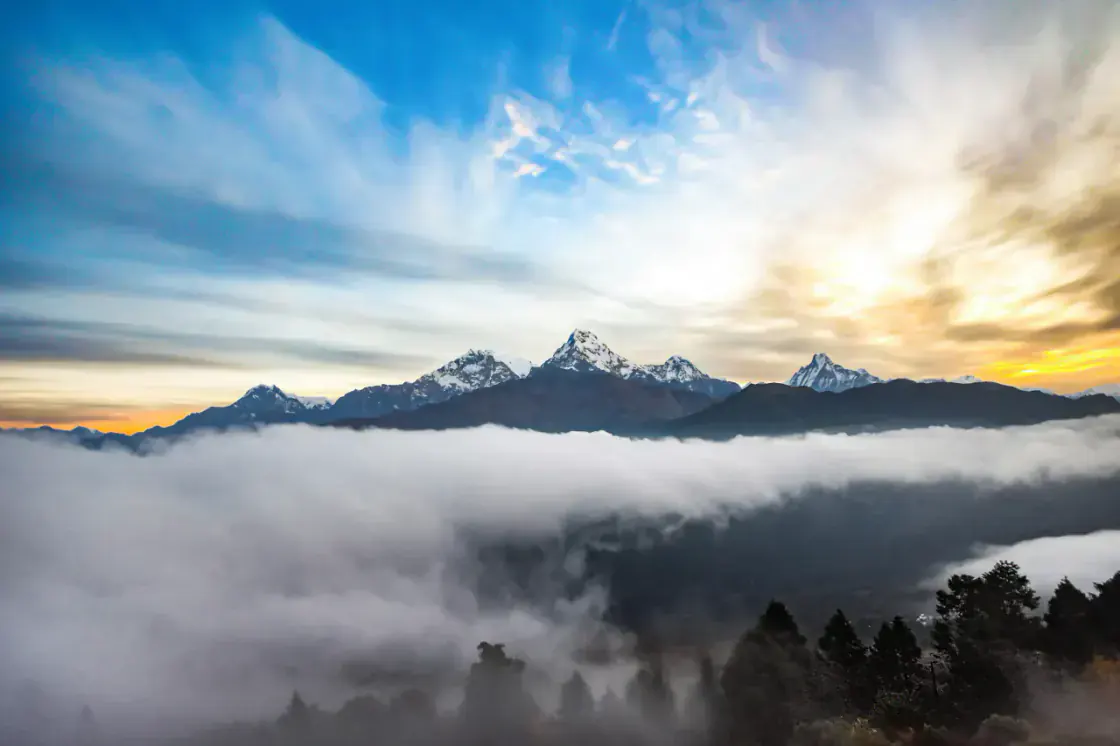
Complete guide
Best Time to Visit Nepal planning advice
Quick Answer: When Is The Best Time To Visit Nepal?
For most travelers, October and November are the best overall months to visit Nepal. March and April are usually the next strongest all-round window.
October and November are popular because the monsoon has normally cleared, mountain visibility is often strong, daytime temperatures are comfortable in many regions, and trekking routes are active. These months work well for Kathmandu, Pokhara, Chitwan, Everest, Annapurna, Langtang, cultural travel, photography, and classic first-time itineraries. They are also busy, so travelers should expect higher demand for guides, lodges, transport, and popular viewpoints.
March and April are the major spring alternative. Days are warmer, rhododendron blooms can color hill and mountain routes, and trekking is again a major draw. Spring can bring haze in some lower areas, but it remains one of the best times for Everest, Annapurna, Pokhara, and many cultural routes. May can still work for some trips, though heat rises in the lowlands and pre-monsoon weather becomes more important.
There is no single best month for every Nepal trip. Winter may be excellent for Kathmandu Valley, Pokhara, Chitwan, Lumbini, and lower-elevation routes, while high passes may be too cold or snow-affected. Monsoon can be challenging for trekking and mountain views, but it can suit travelers interested in green landscapes, fewer crowds, cultural travel, and selected rain-shadow areas. The best time to visit Nepal is the month that matches your route, not just the month with the most generic sunshine.
Autumn In Nepal: October And November
Autumn is Nepal’s classic travel season. For many visitors, this is the easiest time to plan a first trip because the combination of visibility, temperature, trekking infrastructure, and festival energy is strong. Kathmandu Valley is comfortable for heritage walks. Pokhara often has better mountain-view chances than in the wet season. Chitwan is warm, and wildlife activities are easier to combine with hill and mountain routes. Everest and Annapurna trekking routes are at their busiest and most established.
The main drawback is demand. Popular treks, flights, guides, and lodges can book up. Viewpoints and heritage sites can feel busier. Prices may be firmer than in quieter months. If you want the advantages of autumn without the most compressed planning, build the trip early, avoid impossible transfer days, and include at least one buffer if domestic flights or mountain weather are involved.
Autumn is a strong choice for travelers who want the highest probability of broad success across regions. It is especially good for first-time visitors who want Kathmandu, Pokhara, Chitwan, and either a short trek or a Himalayan viewpoint route.
Spring In Nepal: March, April, And May
Spring is warmer, brighter, and more floral than winter. March and April are especially useful for trekking in Nepal because many routes are active, daylight is generous, and hillsides can be beautiful where rhododendrons bloom. Annapurna routes, Mardi Himal, Ghorepani and Poon Hill, Langtang, and Everest region routes all draw travelers in this window. Pokhara also works well as a base for short hikes, paragliding, lake time, and pre- or post-trek recovery.
Spring is not identical to autumn. Haze can reduce long-distance views in lower elevations, and temperatures rise as May approaches. In Chitwan and the Terai, late spring can feel hot. Pre-monsoon weather can become more active, so trekkers should still check local forecasts and conditions. But for travelers who want a balance of mountains, culture, and warmer days, spring is one of the best times to visit Nepal.
Choose spring if your priority is trekking with warmer conditions, seeing hill landscapes come alive, or avoiding the peak intensity of autumn demand. Keep plans flexible around high-altitude weather and do not skip acclimatization just because the season is popular.
Winter And Monsoon: When Off-Season Travel Makes Sense
Winter in Nepal is underrated for the right route. Kathmandu Valley can be clear and pleasant during the day, though mornings and evenings are cool. Pokhara can be calm, and lower viewpoints may still be rewarding. Chitwan and Lumbini can be more comfortable than during the hottest months. The main caution is altitude: high treks are colder, daylight is shorter, and snow or ice can affect routes. Winter works best when the itinerary stays lower or uses experienced support for mountain travel.
Monsoon, roughly the summer rainy season, requires more selectivity. Trails can be muddy, landslides can affect roads, leeches may be present on some routes, and clouds often hide mountain views. Yet monsoon is not automatically a bad time to visit Nepal. The country becomes lush, agricultural landscapes are vivid, cultural sites are quieter, and some rain-shadow routes may be more feasible than classic wet-zone trails. Travelers who care more about culture, writing, photography, food, or slower city stays can still have a meaningful trip.
The key in off-season travel is honesty. If your dream is crisp Himalayan panoramas, do not make monsoon your first choice. If your dream is lowland wildlife, Kathmandu heritage, quieter travel, or a very specific rain-shadow route with local confirmation, off-season planning can work.
Best winter fit
Kathmandu, Pokhara, Chitwan, Lumbini, Bandipur, lower viewpoints, and cultural routes.
Best monsoon fit
Flexible cultural travel, lush landscapes, fewer crowds, and selected routes confirmed by local advice.
Best Time By Destination
Kathmandu is one of Nepal’s most flexible destinations. Autumn and spring are comfortable, winter can be clear and rewarding, and monsoon can still work for travelers focused on museums, food, temples, and urban culture. Pokhara is strongest when skies are clearer, especially autumn and spring, but it can also be a restful base in quieter periods. Chitwan is often best when heat and rain are manageable, with autumn, winter, and early spring commonly preferred by many travelers.
Everest and Annapurna need more caution because altitude changes everything. The best trekking seasons are generally autumn and spring, but specific route conditions, flights, snow, health, and acclimatization matter more than a broad monthly label. Never treat a popular season as a guarantee. Treat it as a better starting probability, then check current conditions before committing.
If you are combining destinations, choose dates around the hardest part of your route. For a trek, optimize for the trekking window. For wildlife, consider heat and park activity. For culture, prioritize festivals, comfort, and time on foot. For a first-time balanced itinerary, October, November, March, and April are usually the easiest months to recommend.
Travelers with fixed dates should reverse the planning process. Instead of asking whether Nepal is good in a certain month, ask which Nepal regions are best for that month. That shift can turn a difficult season into a smart itinerary by matching Kathmandu, Pokhara, Chitwan, Everest, or Annapurna to the conditions most likely to support the trip.
Best Time to Visit Nepal planning sections
Choose season by route, not only by month
Kathmandu, Pokhara, Chitwan, Everest, and Annapurna do not behave the same way in every season. Elevation and route type matter as much as the calendar.
Trekking windows need extra care
Everest and Annapurna are strongest in the classic autumn and spring windows, but snow, rain, clouds, flights, trail conditions, and acclimatization still need checking.
Travel FAQ
Common questions about best time to visit nepal
What is the best month to visit Nepal?
October and November are often the best overall months to visit Nepal because visibility, temperatures, and trekking conditions are usually strong across many regions.
Is March or April a good time to visit Nepal?
Yes. March and April are excellent spring months for many Nepal trips, especially trekking, Pokhara, Kathmandu Valley, and routes where warmer days are helpful.
Can I visit Nepal during monsoon?
Yes, but plan carefully. Monsoon can bring rain, clouds, road disruption, and muddy trails, yet it can still work for cultural travel, lush landscapes, quieter cities, and selected rain-shadow routes.