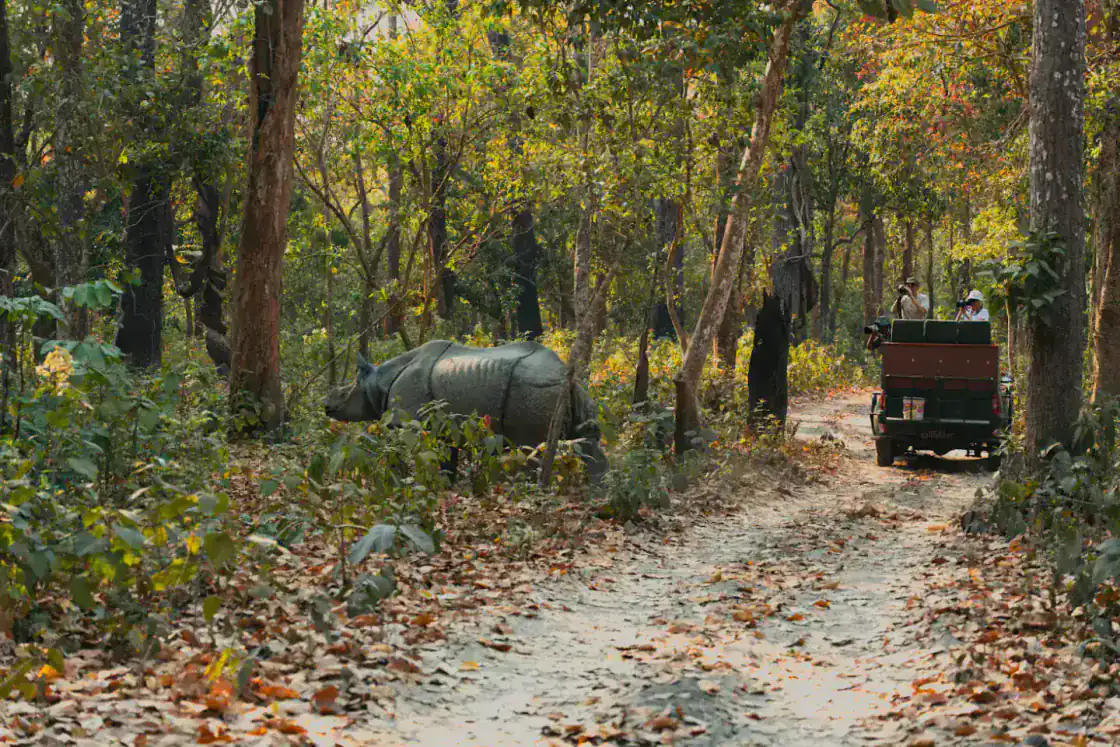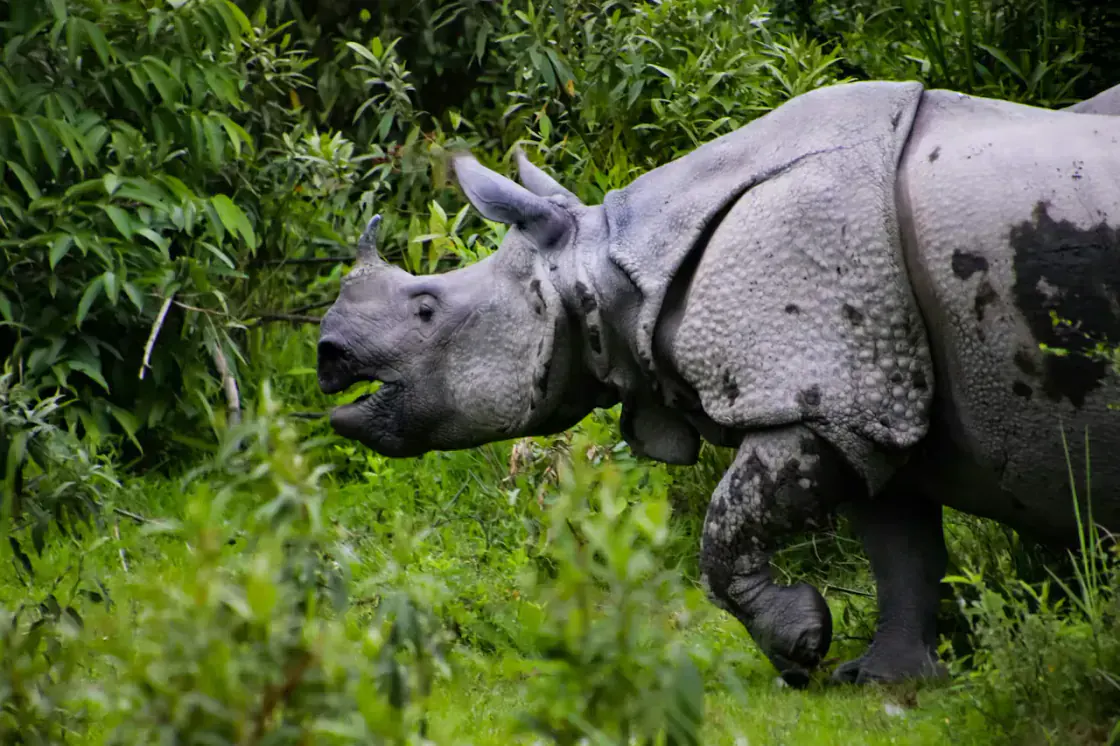
One-horned rhinoceros in Chitwan National Park Nepal

Chitwan National Park

Into Nepal's Wild Heart

Chitwan National Park is Nepal's first national park, a UNESCO World Heritage Site, and a warm lowland world of rhinos, rivers, wetlands, safari trails, and Tharu culture.

Best season

October to March

Wildlife experience

Rhino, birds, rivers, forest

Recommended stay

2-3 nights

UNESCO status

World Heritage Site

What makes Chitwan special

A complete jungle ecosystem, not only a safari stop.

Chitwan blends forest, grassland, wetlands, riverbanks, wildlife movement, village edges, and Tharu culture into one of Nepal's most memorable lowland travel experiences.

Nepal's Most Accessible Jungle

Chitwan is the easiest major wildlife ecosystem to combine with Kathmandu, Pokhara, or Lumbini without forcing a remote expedition.

Rivers And Wetlands

The Narayani and Rapti river systems shape the atmosphere: mist, banks, birds, crocodiles, sunsets, and floodplain life.

Safari Without The Noise

The strongest Chitwan days are not only about sightings. They are about waiting, listening, moving quietly, and reading the forest.

Wildlife And Tharu Culture

Local Tharu life gives Chitwan its human grounding, with village edges, food, houses, dance, and traditions shaped by the Terai.

Wildlife of Chitwan

The forest is alive, but real wildlife asks for patience.

Chitwan is not a zoo list. It is a living lowland ecosystem where guides, silence, river edges, grassland, and timing shape what visitors may experience.

One-Horned Rhinoceros

The rhino is Chitwan's most iconic wildlife encounter. Sightings are possible around grasslands, river edges, and forest openings, but respectful distance matters.

A keystone symbol of lowland conservation in Nepal.

Bengal Tiger

Tigers are present but elusive. Most visitors experience tiger country through tracks, guide interpretation, forest silence, and the awareness of a hidden predator landscape.

A powerful reminder that Chitwan is a real wild ecosystem.

Crocodiles

Crocodile sightings are often connected with canoe rides, riverbanks, and wetland edges, especially when guides read the water carefully.

They reveal the importance of Chitwan's river habitats.

Deer Species

Spotted deer and other deer species bring movement to the grasslands and forest edges, often becoming part of the wider safari rhythm.

They help sustain the predator-prey balance of the park.

Wild Elephants

Elephants may be part of the broader landscape, though encounters require caution, local guidance, and respect for distance.

They show the scale and seriousness of the Terai forest.

Bird Species

Birdlife is one of Chitwan's most rewarding experiences, especially around wetlands, river edges, early mornings, and quieter village roads.

Birds connect forests, water, grassland, and seasonal migration.

Rivers, wetlands and jungle landscapes

Chitwan becomes clearer when you understand its water.

The Narayani and Rapti river systems, wetlands, floodplains, jungle riverbanks, and lake habitats create the atmosphere that makes Chitwan more than a safari road.

Narayani River

Part of the Sapta Gandaki system, the Narayani adds wide river atmosphere, sunset light, bird movement, and a sense of the plains opening out.

Rapti River

The Rapti shapes much of the classic Sauraha riverfront mood: canoe departures, soft evenings, crocodile habitat, and forest edges.

Wetlands And Floodplains

Floodplains, oxbow lakes, reeds, and riverbanks make Chitwan feel like a living water-and-forest system rather than a single safari road.

Bishazari Lake

Wetland areas around Bishazari Lake support birdwatching, photography, quiet nature time, and a slower understanding of Chitwan's ecology.

River and jungle safari atmosphere in Chitwan Nepal

Wetland rhythm

Canoes, birds, crocodile banks, sunset light, and floodplain silence.

Sauraha gateway

The practical doorway into Chitwan's jungle rhythm.

Sauraha is where many travelers arrange guides, start safari activities, walk or cycle near village roads, eat by the river, and settle into the slower pace of the lowlands.

Safari starting point

Jungle lodges and riverside stays

Relaxed restaurants and local movement

Cycling, walking, sunset, and village edges

Safari and jungle activities

Choose activities by rhythm, not pressure.

Chitwan works best when you mix one or two guided wildlife activities with quiet river time, village movement, and enough space for heat and rest.

Jeep Safari

A structured way to enter deeper forest areas with licensed guidance. Best when expectations stay patient and realistic.

Canoe Ride

A quieter river experience where birds, crocodiles, mist, and water-level views become the main memory.

Jungle Walk

A slower and more attentive way to feel the forest. Always use trained guides and follow distance rules.

Bird Watching

Strongest in the morning or near wetlands, river edges, and village roads where the landscape stays open.

Elephant Breeding Center

A commonly visited site near Sauraha. Go with thoughtful expectations and avoid treating elephants as entertainment props.

Sunset Viewing

The riverside sunset is one of Chitwan's simplest pleasures, especially after a warm day in the lowlands.

Village Cycling

Cycling around village edges gives a soft view of fields, homes, river roads, and everyday Terai movement.

Cultural Programs

Tharu dance and cultural evenings add context when presented respectfully and connected with local life.

Tharu village and Chitwan lowland culture atmosphere

Tharu culture

The human identity of Chitwan's forest region.

Tharu culture and local life

Chitwan has a cultural pulse as strong as its forest.

Tharu communities are deeply connected with the Terai environment. Their houses, food, fields, music, and daily rhythms add soul to a Chitwan journey.

Tharu villages and traditional houses
Local food, fields, and lowland daily life
Traditional dance and community identity
A culture deeply shaped by forest, rivers, heat, and the Terai environment

Experience the Chitwan atmosphere

Mornings, heat, rivers, insects, birds, and quiet nights create the memory.

The best Chitwan experience is not loud. It is immersive, warm, slow, and alive in small details that appear when the day has room to breathe.

Misty Jungle Mornings

The day begins with soft air, bird calls, distant movement, and guides reading small signs along the forest edge.

Tropical Heat

Chitwan is warm and lowland. The heat changes the pace, asking travelers to rest, drink water, and move in cooler windows.

Riverside Evenings

After safari hours, the river becomes the calm center: sunset color, quiet conversations, and a slower return to the lodge.

Peaceful Jungle Nights

Nights feel alive without being busy: insects, trees, open sky, and the sense of being away from Nepal's larger cities.

Continue your journey

Place Chitwan where the route naturally changes mood.

Chitwan works beautifully between culture, lakes, spiritual plains, and hill-town pauses.

Browse destinations

Practical visitor information

Useful details for a calmer jungle visit.

Keep the practical layer clear: choose licensed guides, respect wildlife distance, plan around heat, and confirm current park rules before activities.

Best Time

October to March is usually the most comfortable period. April and May are hotter; monsoon changes river, road, and visibility conditions.

Stay Duration

Two nights is a strong minimum. Three nights allow a calmer rhythm with safari, river time, culture, and rest.

Jungle Climate

Expect warmth, humidity, insects, and strong midday sun. Light layers, water, and slower pacing help.

Safari Timing

Dawn and late afternoon usually feel better for activity, light, and wildlife movement than harsh midday heat.

Transport Access

Travelers usually arrive by road from Kathmandu or Pokhara, or by nearby airport plus transfer depending on the route.

Entry Information

Confirm current park entry fees, guide rules, activity permits, and opening conditions with official or licensed local sources.

Overnight Stay

Staying overnight lets the landscape settle around you: river evening, early safari, village roads, and quiet mornings.

Wildlife Safety

Use licensed guides, keep distance from wildlife, avoid isolated forest edges, and follow instructions around rivers and animals.

Source note

Park entry, guide rules, activity access, and wildlife safety guidance can change. Check official and licensed local sources before travel.

FAQ

Common questions about Chitwan.

Short answers for planning a realistic jungle experience.

What is Chitwan famous for?

Chitwan is famous for Chitwan National Park, one-horned rhinoceros habitat, jungle safari experiences, rivers, wetlands, birdwatching, crocodiles, and Tharu culture in Nepal's lowland Terai.

How many days are enough for Chitwan?

Two nights usually give Chitwan a better rhythm than a rushed one-night stop. This allows a jeep safari, canoe or river experience, birdwatching, sunset time, and a calmer look at Tharu village life.

Can I see a tiger in Chitwan?

Bengal tigers live in the Chitwan ecosystem, but sightings are rare and never guaranteed. Travelers should treat tiger habitat as part of the wild atmosphere, not as a promised safari result.

Is Sauraha a good base for Chitwan?

Yes. Sauraha is the most practical gateway for many first-time visitors because it has lodges, guides, restaurants, river access, cycling options, and safari departure points close together.

When is the best time to visit Chitwan National Park?

October to March is usually the most comfortable season for Chitwan, with cooler mornings, easier walking, and pleasant safari timing. April and May can be hot, while monsoon changes river and road conditions.

Travel utility checklist

Chitwan National Park travel planning essentials

Use these structured notes as a planning checklist, then verify seasonal conditions, transport, permits, and local services close to travel.

Last verified: 2026-07-09

Permit Information

Permit status

Check protected-area or restricted-area rules before travel

This site explains requirements, but official permit services remain the source of truth.

Documents to keep ready

Passport, visa, passport photos, and printed or offline permit copies where required

Transport Options

Route planning

Compare this stop with nearby places in the route planner

Transport certainty

Confirm road, flight, or trail access locally

Estimated Costs

Budget level

medium

Stay length

2 days suggested by the destination dataset

Emergency And Health

Safety level

caution

Hospital information

Use local city hospitals or clinics; confirm nearest facility before remote side trips

Emergency contacts

Save Tourist Police and local operator or hotel contacts offline

ATM, Internet And SIM

ATM availability

Available in main towns or hubs

Carry enough cash before leaving a gateway town.

Internet and SIM

Mobile signal can vary by route and weather

Altitude, Weather And Seasons

Altitude

150 m

Best months

Oct, Nov, Dec, Jan, Feb, Mar

Weather check

Check current conditions before booking transport or trekking days

Packing Tips

Core packing

Layered clothing, rain protection, water bottle, offline maps, power bank, and copies of documents

Terrain note

Comfortable walking shoes are usually enough for core sightseeing

Nearby Places

Next step

Use related destination links and the route planner to connect this page into a wider itinerary

Travel warnings and verification notes

  • Do not treat estimated costs or permit summaries as official services.
  • Verify road, flight, trail, and weather conditions close to departure.

Smart route check

Plan Chitwan National Park by travel order, not just by popularity.

This is where Discover Nepal Hub is different: the goal is to reduce backtracking, missed nearby places, and confusing Nepal route choices.

Compare this route in the planner

Best route direction

Kathmandu -> Chitwan -> Lumbini: the plains route balances wildlife time with a spiritual stop and smoother overland movement.

Useful next move

Chitwan National Park -> Meghauli: Meghauli is close enough to help build a cleaner regional route instead of adding a disconnected detour.

Mistake to avoid

Expecting guaranteed wildlife sightings or booking activities without checking guide quality.

Destination decision panel

Decide if Chitwan National Park belongs in your Nepal itinerary.

Chitwan National Park is best understood through wildlife, jungle, safari experiences in Chitwan.

Best for

adventure travelers, photographers, families, wildlife travelers

Not ideal for

travelers expecting guaranteed sightings or a one-hour safari checklist

Recommended stay

2 days

Budget level

Moderate

Difficulty level

easy

Family suitability

Good with pacing

Solo traveler suitability

Good with normal precautions

First-time Nepal visitor

Strong fit

Who should visit

Match Chitwan National Park to the right traveler type.

Photographers

Why it fits: Chitwan National Park rewards photographers who plan around morning light, weather, and the specific wildlife / jungle setting.

Why it may not fit: It may disappoint if the visit is squeezed into harsh midday light or poor visibility.

Wildlife travelers

Why it fits: Chitwan National Park works for travelers who value patient naturalist-led time and dawn or dusk activity windows.

Why it may not fit: It may not fit anyone expecting guaranteed animal sightings or a rushed single activity.

Families

Why it fits: Chitwan National Park can work for families when the day is paced around short transfers, meals, rest, and simple activity blocks.

Why it may not fit: It becomes harder when adults overpack the schedule or ignore heat, traffic, stairs, or tired children.

Adventure travelers

Why it fits: Chitwan National Park works for adventure travelers when safety checks, weather, and operator quality shape the plan.

Why it may not fit: It may not fit travelers who want every activity confirmed regardless of conditions.

Things to do

Practical activities for Chitwan National Park.

Arrival and sunset

Start with this because it reveals wildlife, jungle, safari experiences in Chitwan.

Time: Half day

Cost: Moderate

Best time: Clear-season morning

Tip: Book activities through licensed lodges, park offices, or reputable naturalists.

morning safari

Use this to add depth beyond the main arrival point in Chitwan National Park.

Time: Half day

Cost: Moderate

Best time: Clear-season morning

Tip: Wildlife is never guaranteed; choose longer stays for better rhythm and less rushed viewing.

canoe or birding

Use this to add depth beyond the main arrival point in Chitwan National Park.

Time: Half day

Cost: Moderate

Best time: Clear-season morning

Tip: Follow guide instructions strictly around rhinos, elephants, crocodiles, tigers, and river edges.

How to reach

From Kathmandu

Use tourist bus, private vehicle, or a domestic flight plus lodge transfer depending on budget and time.

From Pokhara

Road travel is common; leave early and avoid planning safari activities immediately after a long arrival.

By local bus

Possible for budget travelers, but transfers and drop-off points require patience and local confirmation.

Where to stay

Main lodge area

Choose by naturalist quality, transfer support, and activity ethics rather than room photos alone.

Riverside lodge

Good for travelers who want atmosphere between safari blocks.

Common mistakes

  • expecting guaranteed wildlife sightings or booking activities without checking guide quality.
  • treating Chitwan National Park as a quick pin instead of matching it to your route sequence.
  • forgetting cash for small tickets, local transport, snacks, tips, toilets, or remote payments.
  • arriving too late in the day and losing the best light, transport window, or activity timing.

Local food and experiences

Naturalist-led wildlife time

The best experiences depend on patient guides, dawn or dusk timing, and respectful distance from animals.

River-edge evenings

Sunset and birdlife often make the hours between activities feel as important as the safari itself.

Local community context

Tharu or lowland cultural experiences add meaning when they are handled respectfully and not rushed.

Destination connections

Kathmandu -> Chitwan -> Lumbini

the plains route balances wildlife time with a spiritual stop and smoother overland movement.

Chitwan National Park -> Meghauli

Meghauli is close enough to help build a cleaner regional route instead of adding a disconnected detour.

Chitwan National Park -> Sauraha

Sauraha is close enough to help build a cleaner regional route instead of adding a disconnected detour.

Trip planning insights

The decisions to make before booking Chitwan National Park.

How many days should I stay?

2 days is the practical first-plan answer. Add time if Chitwan National Park is part of a longer route, weather-dependent activity, trekking stage, or remote transfer.

When should I skip this destination?

Skip it if you need guaranteed wildlife sightings or only have time for one rushed night.

What season is best?

Oct, Nov, Dec, Jan, Feb, Mar are usually strongest because dry-season conditions improve park access, wildlife tracking rhythm, and comfort in the lowlands.

Can it be visited year-round?

Usually yes, but the quality of the visit changes by season. In hotter or wetter months, start early and keep the route lighter.

What type of trip benefits most?

Chitwan National Park works best in a trip built around adventure travelers, photographers, families, wildlife travelers rather than a route that adds stops only because they look close on a map.

Cookie choices

Essential storage keeps this choice. Analytics cookies only load if you accept them. Read the privacy policy.