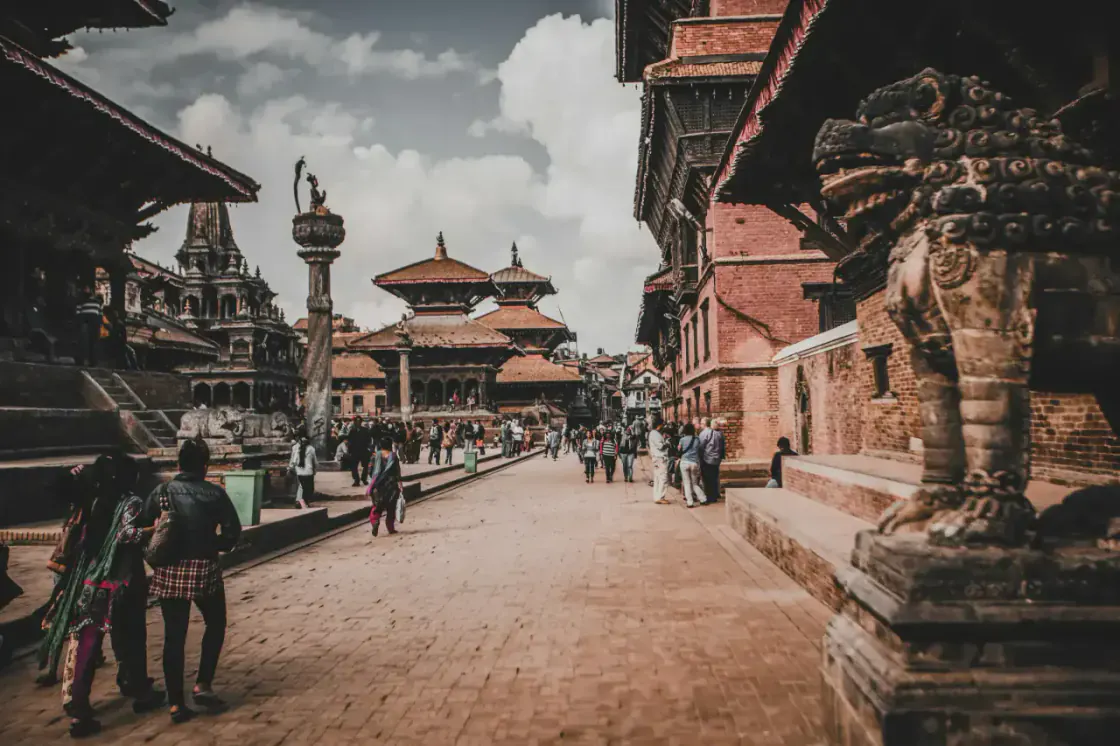
Kathmandu travel guide 2026
Kathmandu - Where Nepal Begins
Ancient temples, local food, spiritual landmarks, hidden courtyards and the gateway to every major Nepal journey.
Airport arrival
SIM, cash, taxi, first hotel transfer
Thamel street vibe
Food, gear shops, nightlife, quick logistics
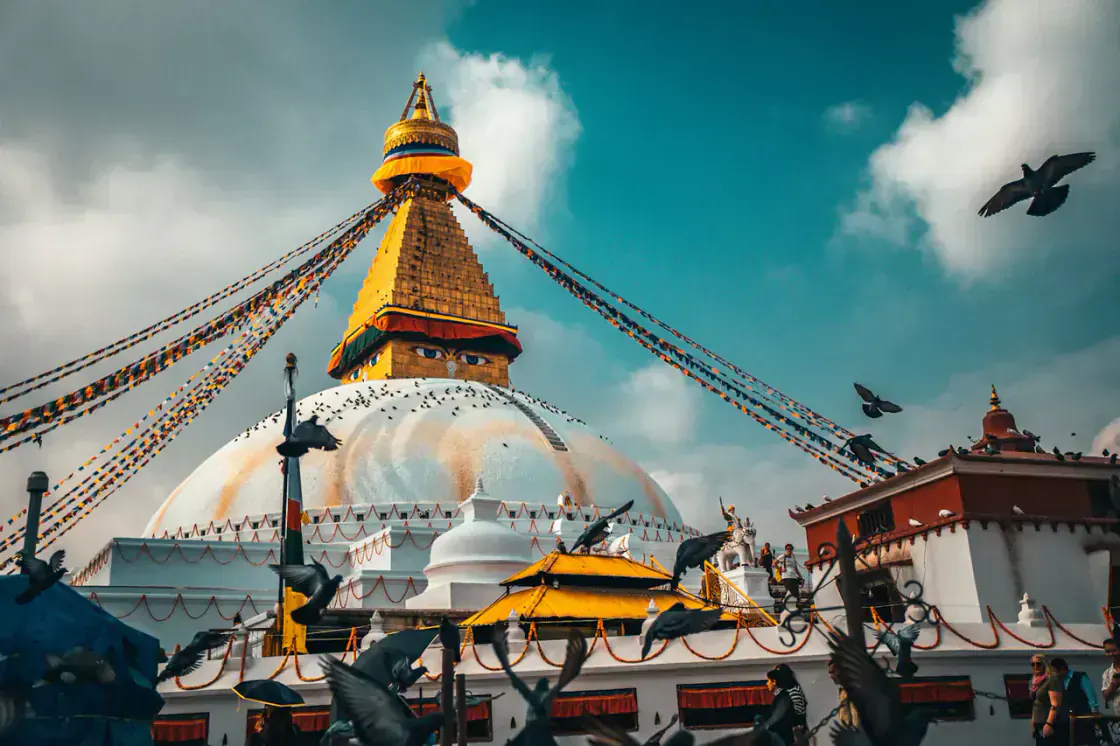
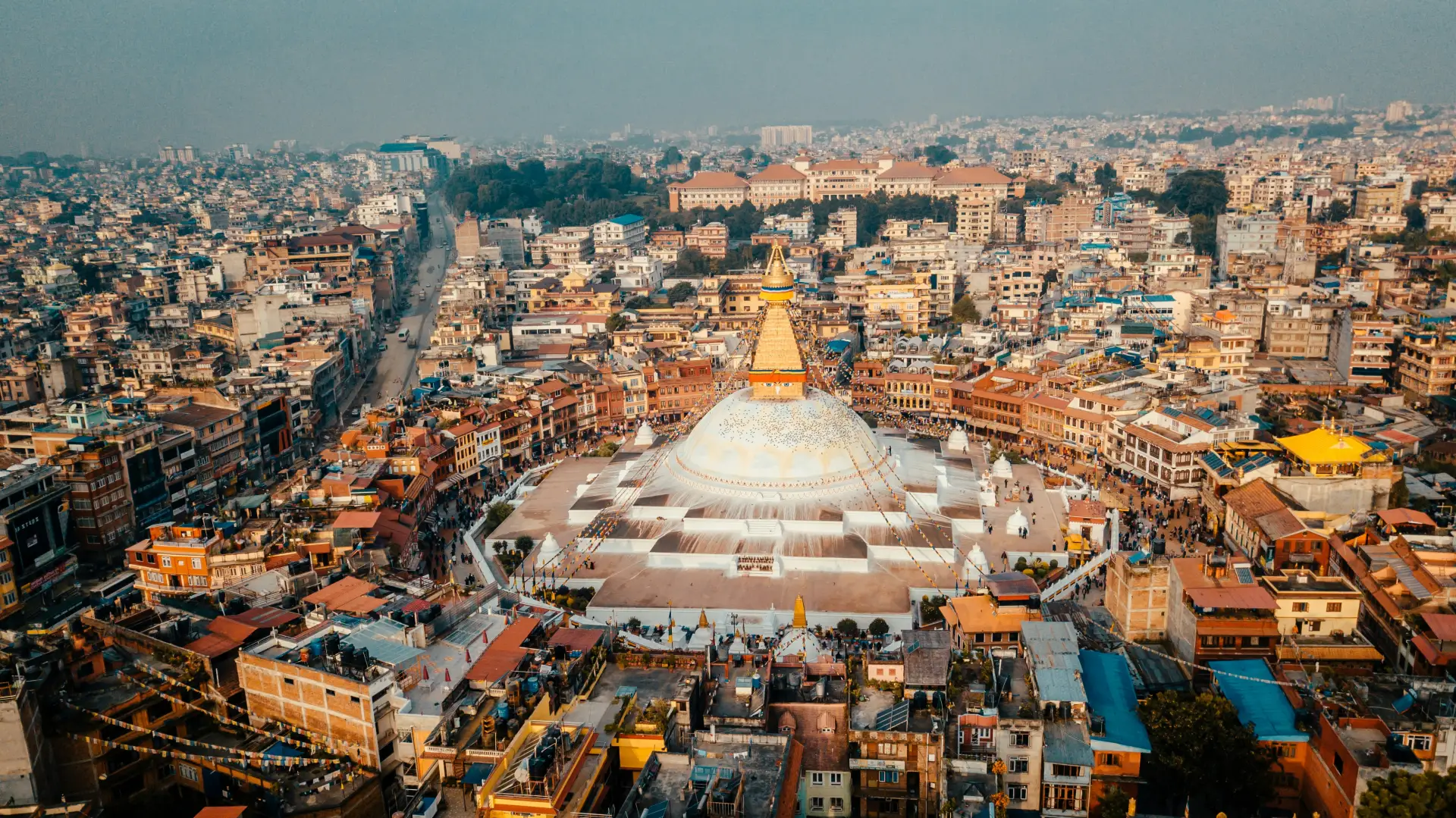
Boudhanath prayer flags
Peaceful walks, rooftops, spiritual rhythm
Gateway routes
Pokhara, Chitwan, Everest, Lumbini
First-time arrival guide
Land in Kathmandu with fewer question marks.
The first few hours shape the rest of a Nepal trip. Handle connection, cash, transport, and neighborhood basics before you start sightseeing.
SIM Card Guide
NTC and Ncell tourist SIMs are commonly available at airport counters and verified mobile shops. Bring your passport and choose enough mobile data for maps, ride apps, messaging, and hotel calls.
Set up mobile data before leaving the airport if you are arriving without a local pickup.
Currency Exchange
Airport exchange exists, but rates may be less attractive than licensed counters in Thamel and tourist areas. ATMs are common in Thamel, Lazimpat, Boudha, and Patan.
Carry some cash in small NPR notes for taxis, entry fees, snacks, and small shops.
Transportation
Use trusted ride apps when available, or ask your hotel to arrange a taxi. Avoid random overpriced airport taxi offers and agree on the price before the ride starts.
Confirm fare, route, luggage space, and pickup point before loading bags.
Best First Stay Areas
Thamel is easiest for first-time tourists, Boudha is peaceful and spiritual, Patan is best for culture, and Lazimpat suits travelers who want quieter comfort near the center.
Choose your first hotel for arrival convenience, not only room price.
First-Day Advice
Rest after arrival, take a short evening walk in Thamel or Boudhanath, eat somewhere reliable, and save major sightseeing for the next morning.
Avoid overplanning the first day after an international flight.
Tourist Safety Basics
Use zipped bags in crowds, avoid isolated late-night walks, keep passport copies separate, and ask before photographing rituals or cremation areas.
Kathmandu is manageable when you move calmly and verify details.
Quick overview
Kathmandu is your first decision layer.
Use this snapshot to decide how long to stay, where to base yourself, and when to move toward the rest of Nepal.
Best For
First Nepal landing, heritage, food, trip setup, spiritual sites
Recommended Stay Duration
2-3 days for Kathmandu; 4 days with Patan, Bhaktapur, or Nagarkot
Budget Range
Budget to luxury; transport and entry fees vary by pace
Best Season
October-December and March-April for clearer skies and comfortable walking
Airport Access
Tribhuvan International Airport sits inside the city; traffic changes transfer time
Main Travel Vibe
Dense, spiritual, energetic, practical, and deeply layered
Gateway Destinations
Pokhara, Chitwan, Everest, Lumbini, Annapurna, Nagarkot
Traveler personality system
What kind of traveler are you?
Use these cards like a decision shortcut. Kathmandu becomes easier when your route matches your travel style instead of copying a random attraction list.
Culture Explorer
Durbar Squares, Patan, Bhaktapur, museums, craft lanes, and guided old-city walks.
Start with Kathmandu Durbar Square, save Patan for a slower half day, and give Bhaktapur its own morning.
Spiritual Traveler
Pashupatinath, Boudhanath, monasteries, morning rituals, butter lamps, and evening kora.
Keep Pashupatinath and Boudhanath together on the east side to avoid traffic-heavy backtracking.
Food Explorer
Newari food, momo, local markets, Thakali meals, traditional restaurants, and safe beginner-friendly tasting.
Use Thamel for easy first meals, then try Patan or Kirtipur-style Newari food once you know your spice comfort.
Photographer & Sunset Explorer
Swayambhunath, Chandragiri Hills, hidden alleys, rooftop cafes, prayer flags, and golden-hour viewpoints.
Use morning for streets and courtyards, then choose Swayambhunath or Chandragiri based on visibility.
Adventure Gateway Traveler
Everest flights, trekking routes, Pokhara transfers, Annapurna access, gear checks, and permit conversations.
Use Kathmandu for setup, then move efficiently toward Pokhara, Everest, or Annapurna with a weather buffer.
Best areas to stay
Where should you stay in Kathmandu?
The right base reduces traffic stress. Choose the neighborhood that matches your first priority: logistics, calm, culture, or comfort.
Thamel
Busy traveler base with hotels, restaurants, trekking shops, money exchange, nightlife, and quick logistics.
- Best traveler type
- First-time visitors, solo travelers, nightlife seekers, trekkers preparing gear.
- Nightlife level
- Highest
- Safety
- Good in main streets; stay aware in crowded alleys late at night
- Nearby attractions
- Garden of Dreams, Ason, Kathmandu Durbar Square
- Culture
- Moderate; better for logistics than quiet heritage
- Convenience
- Excellent for first two nights
Boudha
Calmer spiritual rhythm around Boudhanath Stupa, monasteries, rooftop cafes, and evening kora walks.
- Best traveler type
- Spiritual travelers, families, slower travelers, photographers.
- Nightlife level
- Low
- Safety
- Comfortable around the stupa zone; quiet at night
- Nearby attractions
- Boudhanath Stupa, Pashupatinath, airport-side hotels
- Culture
- Very high
- Convenience
- Good for airport side and Pashupatinath
Patan
Artful, walkable, local, and heritage-rich with courtyards, museums, cafes, and quieter evenings.
- Best traveler type
- Culture seekers, couples, design lovers, repeat visitors.
- Nightlife level
- Low to medium
- Safety
- Good in main heritage and cafe areas; use normal city awareness
- Nearby attractions
- Patan Durbar Square, Patan Museum, Mangal Bazaar
- Culture
- Very high
- Convenience
- Strong for Patan and south valley exploration
Lazimpat
Quieter diplomatic and hotel district with easier comfort, restaurants, and access to central Kathmandu.
- Best traveler type
- Business travelers, families, premium travelers, people who want calm near Thamel.
- Nightlife level
- Medium nearby
- Safety
- Generally comfortable and calmer than Thamel
- Nearby attractions
- Thamel, Garden of Dreams, central hotels and restaurants
- Culture
- Moderate
- Convenience
- Good balance between calm and access
Smart experience routes
Follow routes, not random pins.
Kathmandu gets easier when nearby experiences are grouped together. These route ideas reduce backtracking and match the rhythm of the city.
Spiritual Kathmandu Route
Pashupatinath -> Boudhanath -> Kopan-side cafe or monastery area
Start early morning at Pashupatinath, reach Boudha before lunch, return after sunset lamps.
Transport: Taxi or ride app between Pashupatinath and Boudha; walking only inside each zone.
Nearby: Airport-side hotels, Boudha rooftop cafes, monastery lanes
Photo timing: Morning rituals at Pashupatinath, blue hour around Boudhanath
5-7 hours
Keeps eastern Kathmandu together and avoids crossing the city twice.
Heritage Kathmandu Route
Kathmandu Durbar Square -> Patan -> Bhaktapur
Use a full day or split into two days. Start early and avoid crossing the city at rush hour.
Transport: Private car or taxi works best; do not force all three by local bus on a short trip.
Nearby: Ason lanes, Patan Museum, Pottery Square
Photo timing: Early morning in Kathmandu, late afternoon in Patan or Bhaktapur
Full day, better as 1.5 days
Best for travelers who want heritage depth without reading long history blocks.
Local Food Route
Thamel -> local food streets -> rooftop cafes
Late morning to evening, with walking breaks between heavier meals and a softer dinner plan.
Transport: Mostly walking inside Thamel and old market lanes; taxi to Patan or Boudha if extending.
Nearby: Ason, Patan, Boudha rooftop cafes
Photo timing: Food details at lunch, rooftop street lights after sunset
Half day to full day
Use this route when you want local food without gambling on random street choices.
Sunset & Photography Route
Swayambhunath -> Chandragiri Hills
Pick one for sunset if time is short; do both only when the sky is clear and transport is arranged.
Transport: Taxi or private vehicle; Chandragiri needs more planning than Swayambhunath.
Nearby: Thamel, Kirtipur, Thankot road
Photo timing: Swayambhunath golden hour or Chandragiri morning panorama
4-5 hours
Best when visibility is decent and you want photos without a dawn start.
Hidden Courtyard Route
Courtyards -> markets -> Newari alleys
Slow late morning route with cafe pauses and fewer large-site crowds.
Transport: Walk with a local guide in old-city areas; taxi only between neighborhoods.
Nearby: Ason, Patan lanes, Kirtipur, Garden of Dreams
Photo timing: Doorways, brick alleys, shopfronts, courtyards, and soft afternoon details
4-6 hours
Works well after a heavy temple day when you want texture, not another checklist.
Top attractions
The best places to visit in Kathmandu, explained like a local plan.
No long history lecture here. Each card tells you why to go, when to go, how to photograph it, and what to pair nearby.

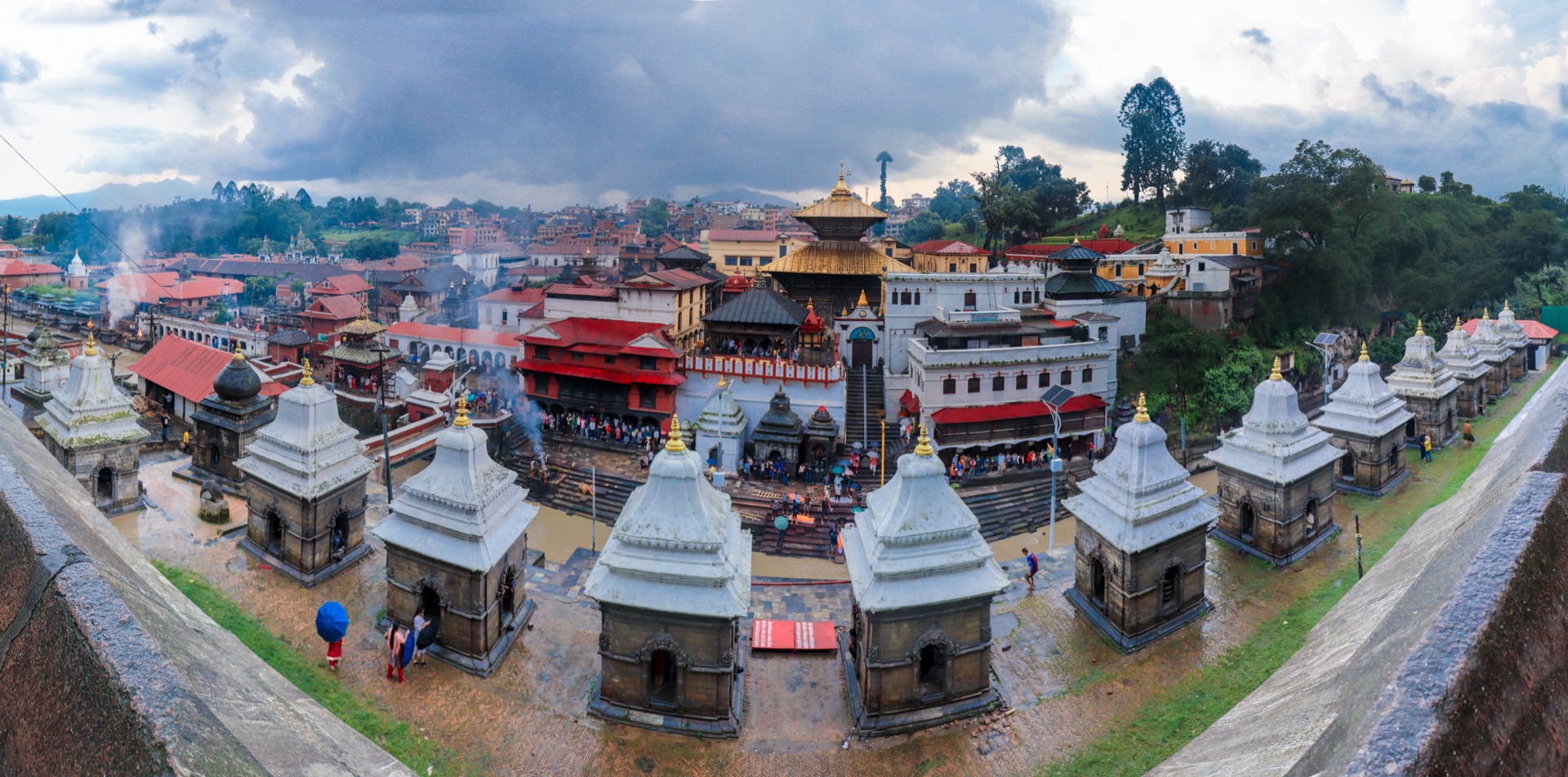
Pashupatinath Temple
A powerful Hindu pilgrimage complex where tourists witness living ritual, devotion, and riverside ceremony.
Best time: Early morning or late afternoon
Photography: Soft morning light; be careful and respectful near cremation areas
Nearby: Boudhanath Stupa, airport-side hotels
Duration: 1.5-2.5 hours
Non-Hindus cannot enter the main temple sanctum, so use the wider complex respectfully.
Open guideLearn More
This is one of Nepal's most important Hindu sacred areas, but visitors get the most value by understanding etiquette, cremation-area sensitivity, and living ritual rather than memorizing dates.

Boudhanath Stupa
A peaceful circular walking experience with Tibetan Buddhist culture, monasteries, butter lamps, and rooftop views.
Best time: Sunrise or early evening
Photography: Blue hour and prayer-flag details from rooftop cafes
Nearby: Pashupatinath, Kopan area
Duration: 1.5-3 hours
Walk clockwise with local worshippers and avoid blocking prayer movement.
Open guideLearn More
Boudhanath is a major Tibetan Buddhist center in Kathmandu. Its daily rhythm is easiest to feel during morning or evening kora, when locals circle the stupa in prayer.

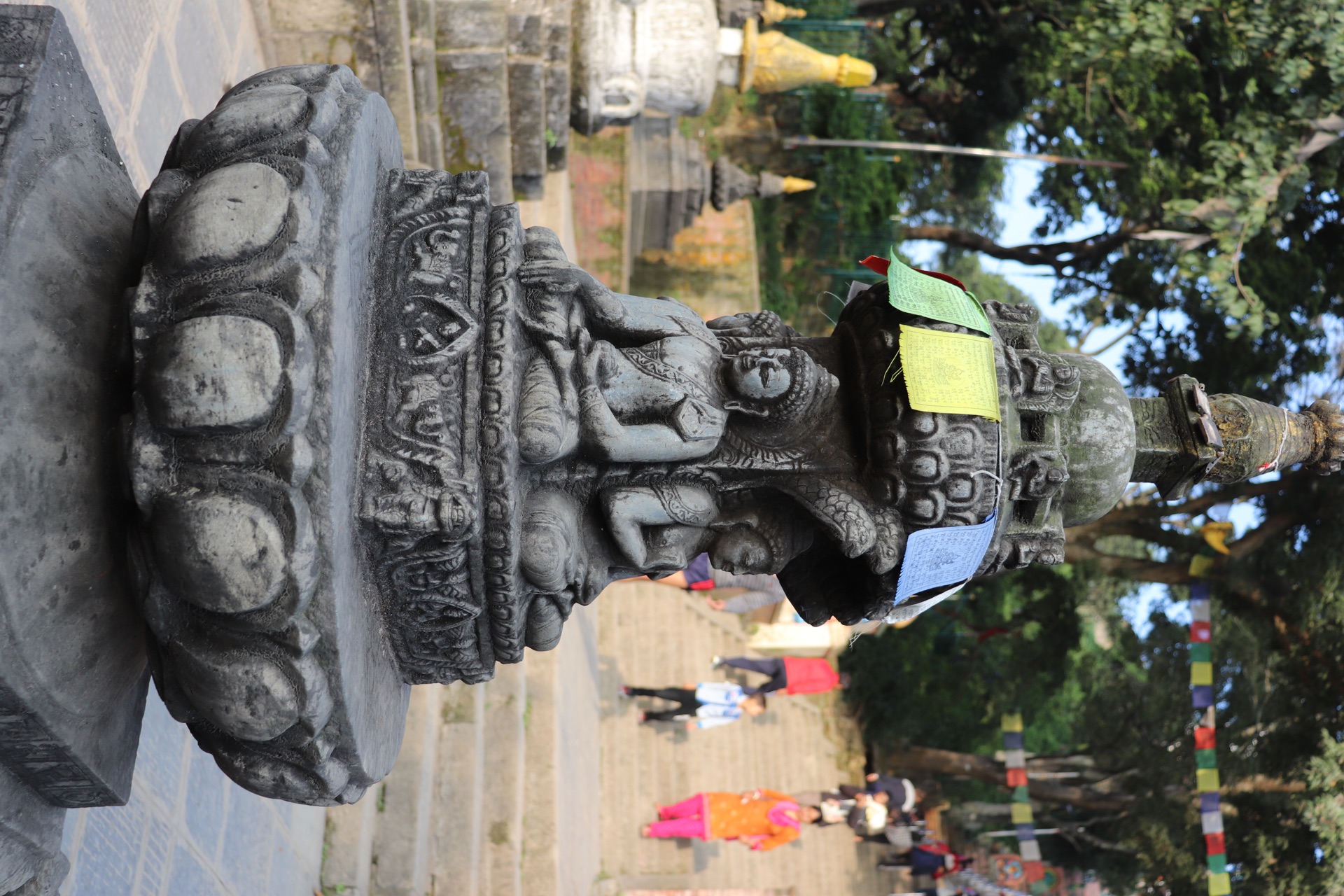
Swayambhunath
A hilltop stupa with valley views, prayer wheels, shrines, and a clear sense of Kathmandu's scale.
Best time: Morning or sunset
Photography: Late afternoon for warm light over the valley
Nearby: Kathmandu Durbar Square, Thamel
Duration: 1.5-2 hours
Use the steps if you want the classic approach; use road access if mobility is a concern.
Open guideLearn More
Swayambhunath blends Buddhist and Hindu devotion on a hill above the city. The practical value for travelers is orientation: you understand Kathmandu's sprawl immediately from the viewpoint.

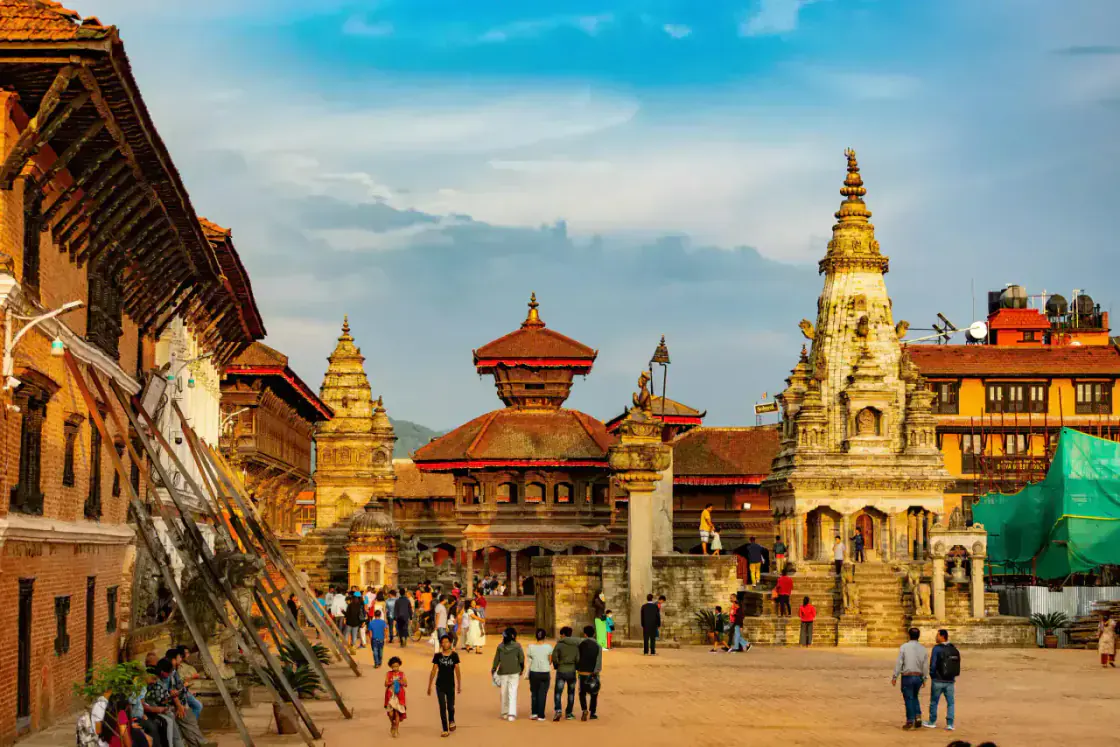
Kathmandu Durbar Square
A dense old-city introduction with palaces, temples, courtyards, living streets, and market access nearby.
Best time: Morning before traffic and crowds build
Photography: Early morning facades and old lanes around Ason
Nearby: Ason market, Thamel, Swayambhunath
Duration: 2-3 hours
Pair it with a guided walk if you want meaning without turning the day history-heavy.
Open guideLearn More
The square is part palace area, part public life, and part old-city connector. A short guide-led walk helps separate living culture from simple sightseeing.

Patan Durbar Square
One of the best places for art, architecture, museums, cafes, and walkable old courtyards.
Best time: Late morning to sunset
Photography: Golden hour over brick lanes and temple roofs
Nearby: Patan Museum, Mangal Bazaar, local courtyards
Duration: 2.5-4 hours
Stay for dinner nearby if you want a calmer evening than Thamel.
Learn More
Patan is strongly associated with art, metalwork, courtyards, and museum-quality heritage. It is one of the easiest places to slow down without leaving the valley.

Bhaktapur Durbar Square
A preserved old-city atmosphere with pottery, squares, woodwork, and fewer central-Kathmandu distractions.
Best time: Full morning or late afternoon
Photography: Morning crafts, brick textures, and open squares
Nearby: Pottery Square, Nyatapola Temple, Nagarkot route
Duration: Half day
Best as a dedicated half-day, not squeezed between airport errands.
Learn More
Bhaktapur rewards unhurried walking through squares, pottery areas, and brick lanes. It pairs well with Nagarkot if you are planning a sunrise or overnight hill escape.

Chandragiri Hills
A cable-car escape for hill air, valley views, and Himalayan panoramas when the sky is clear.
Best time: Clear morning
Photography: Morning mountain visibility before haze rises
Nearby: Kirtipur, Thankot road
Duration: Half day
Check visibility before committing; the view matters here.
Learn More
Chandragiri is less about dense sightseeing and more about clear-air panorama. If haze is heavy, keep it as a flexible backup rather than a fixed must-do.

Garden of Dreams
A calm pause near Thamel when the city feels too loud and you need an easy reset.
Best time: Afternoon or early evening
Photography: Soft garden details and quiet portraits
Nearby: Thamel, Narayanhiti area, Lazimpat
Duration: 45-90 minutes
Use it as a recovery stop between walks, not as a full sightseeing anchor.
Open guideLearn More
This garden works best as a reset point. It gives tourists a quiet pocket near Thamel when traffic, noise, or heat starts to drain the day.

Budhanilkantha
A local spiritual stop known for its reclining Vishnu image and quieter northern Kathmandu atmosphere.
Best time: Morning worship time
Photography: Respectful wider shots; avoid intrusive ritual photography
Nearby: Shivapuri area, Boudha-side routes
Duration: 1-1.5 hours
Combine with a north-side plan so you are not fighting cross-city traffic.
Learn More
Budhanilkantha is a local devotional stop rather than a high-production tourist site. Go for quiet observation and respectful presence.

Thamel
The practical tourist engine for hotels, food, gear, trekking shops, money exchange, and nightlife.
Best time: Evening for energy; morning for errands
Photography: Street lights, shopfronts, food signs, and traveler scenes
Nearby: Garden of Dreams, Ason, Kathmandu Durbar Square
Duration: 2 hours to full evening
Stay aware in crowds and confirm transport prices before leaving late.
Open guideLearn More
Thamel is Kathmandu's tourism operating zone: hotels, food, gear, agencies, exchange counters, and nightlife. It is practical, not peaceful.
Local food experience
Eat local without making your first meal a gamble.
Kathmandu food culture is social, generous, and layered. Start beginner-friendly, then move into Newari flavors once you know your spice comfort.
Momo
Try steamed or jhol momo in Thamel, Boudha, Patan, or local restaurants. Best beginner choice.
Newari Khaja Set
Best in Patan, Kirtipur, or Newari restaurants. Start with a mild version if spice or fermented flavors are new.
Chatamari
A Newari rice-flour pancake often described as Nepali pizza. Good shared snack for cautious first-timers.
Yomari
Sweet rice-flour dumpling found especially around Newari communities and festivals. Ask for chaku filling.
Sel Roti
A lightly sweet ring-shaped rice bread, common with tea and festival meals. Easy, familiar, and vegetarian-friendly.
Thakali Set
A reliable dal bhat-style meal with rice, lentils, vegetables, pickles, and curry. Great for a first proper Nepali meal.
Suggested itineraries
Realistic Kathmandu plans for first-time visitors.
These plans leave space for traffic, jet lag, meals, tickets, and the fact that Kathmandu is better when you stop trying to conquer it.
2-Day Kathmandu Plan
- Day 1: Arrive, set up SIM and cash, settle in Thamel or Boudha, visit Garden of Dreams or Boudhanath at sunset.
- Day 2: Start with Pashupatinath, continue to Boudhanath, rest at midday, finish with Swayambhunath or Thamel dinner.
4-Day Kathmandu + Nearby Experience Plan
- Day 1: Arrival setup, light food, short neighborhood walk, early night.
- Day 2: Kathmandu Durbar Square, Ason lanes, Swayambhunath sunset.
- Day 3: Patan Durbar Square, museum/courtyards, Newari lunch, Boudha evening.
- Day 4: Bhaktapur half-day or Nagarkot sunrise, then prepare for Pokhara, Chitwan, Lumbini, or Everest connection.
Tourist problem solver
Common Kathmandu problems, solved before they become your day.
The city rewards travelers who plan around friction: traffic, crowds, cash, etiquette, pollution, and late transport.
Traffic Timing
Airport and cross-city transfers can take much longer during commute hours. Leave buffers before flights, buses, and appointments.
Taxi Scams
Agree on a fare first, use ride apps where practical, or ask hotels for trusted taxis. Do not negotiate after the ride begins.
Crowded Hours
Big sites are calmer early morning. Thamel is busiest at night; Boudha is most atmospheric around evening kora.
Air Pollution
Carry a mask for dusty roads and dry-season haze. Choose hill or courtyard routes when the center feels heavy.
Money Exchange
Use licensed counters and count cash before leaving. Keep small notes for taxis and small shops.
Temple Etiquette
Dress modestly, walk clockwise around stupas, remove shoes where requested, and ask before taking close photos.
Cash vs Card
Cards work in many hotels and better restaurants, but cash remains essential for taxis, entry fees, snacks, and smaller places.
Safe Walking Areas
Thamel, Boudha, Patan heritage streets, and Lazimpat hotel areas are easiest for tourists. Use taxis at night between neighborhoods.
Internet Availability
Hotel Wi-Fi is common, but mobile data is the smoother safety net for maps, ride apps, messaging, and route changes.
Kathmandu as Nepal gateway
Kathmandu is where the wider Nepal route begins.
Use the capital as a launchpad. Once your SIM, cash, permits, and transport are clear, the next destination should match the trip you actually want.

Pokhara
Lake calm, sunrise viewpoints, adventure activities, and the easiest launch toward Annapurna treks.
Best transport: Tourist bus, private vehicle, or domestic flight
Travel time: 25-35 min flight or 7-10 hr road depending on conditions
Travel vibe: Soft adventure, lakeside recovery, mountain light

Chitwan
Wildlife safaris, river landscapes, forest lodges, and a very different lowland Nepal rhythm.
Best transport: Tourist bus, private vehicle, or flight to Bharatpur plus transfer
Travel time: 20-25 min flight plus transfer or 5-7 hr road
Travel vibe: Wildlife, warm air, slower evenings

Everest Region
High Himalayan trekking, Sherpa culture, Namche Bazaar, monasteries, and Everest Base Camp dreams.
Best transport: Flight to Lukla or road-and-trek alternatives with guide planning
Travel time: Flight day plus weather buffer; trek length varies
Travel vibe: High altitude, expedition energy, careful pacing

Lumbini
A quieter spiritual route to the birthplace of Buddha, monasteries, gardens, and reflective travel.
Best transport: Flight to Bhairahawa plus transfer, tourist bus, or private vehicle
Travel time: 35-45 min flight plus transfer or 8-10 hr road
Travel vibe: Spiritual, spacious, reflective

Nagarkot
Easy hill-station sunrise, mountain views, and a low-effort escape from the city.
Best transport: Private vehicle or arranged hotel transfer
Travel time: 1.5-2.5 hr from central Kathmandu depending on traffic
Travel vibe: Sunrise, quiet hill air, short escape

Annapurna Region
Classic trekking routes through villages, forests, ridges, and Himalayan amphitheaters.
Best transport: Travel via Pokhara, then road transfer to trailheads
Travel time: Kathmandu to Pokhara first, then 2-11 trekking days depending on route
Travel vibe: Village trails, mountain lodges, flexible trek choices
FAQ
Kathmandu travel guide FAQ
Quick answers for safety, timing, stay areas, costs, onward travel, and how to use Kathmandu correctly.
Is Kathmandu worth visiting?
Yes. Kathmandu is worth visiting because it helps first-time travelers understand Nepal before moving onward. It combines arrival logistics, temples, food, old-city walks, spiritual landmarks, and route connections to Pokhara, Chitwan, Everest, Lumbini, Annapurna, and Nagarkot.
How many days are enough in Kathmandu?
Two full days are enough for the main Kathmandu experience if your trip is short. Four days works better if you want Patan, Bhaktapur, Boudhanath, Pashupatinath, Swayambhunath, food routes, and a nearby sunrise escape without rushing.
Is Kathmandu safe for tourists?
Kathmandu is generally manageable for tourists who use normal city awareness. Stay in established areas, agree taxi prices first, protect valuables in crowds, avoid isolated late-night walks, and use hotel help for uncertain transport.
What is the best area to stay in Kathmandu?
Thamel is the easiest first base for logistics, nightlife, food, trekking shops, and money exchange. Boudha is better for spiritual calm, Patan for culture and courtyards, and Lazimpat for quieter premium comfort near central Kathmandu.
Can tourists travel in Kathmandu without guides?
Yes, tourists can visit many Kathmandu sites independently. A guide is useful for Pashupatinath, Durbar Squares, Patan, Bhaktapur, and old-city walks because the experience becomes clearer without turning into a confusing list of buildings.
What should I do after arriving in Nepal?
After arriving in Nepal, set up your SIM card, get some Nepali rupees, confirm hotel transfer or ride app pickup, check into your hotel, eat somewhere reliable, and keep the first day light. Save major sightseeing for the next morning.
Is Kathmandu expensive?
Kathmandu can be budget-friendly or premium depending on hotel choice, transport style, restaurants, and guided experiences. Cash is still important for taxis, small food stops, entry fees, and local purchases.
How do I travel from Kathmandu to Pokhara?
Most travelers go from Kathmandu to Pokhara by tourist bus, private vehicle, or short domestic flight. Flights are fastest but weather-dependent, while road travel takes longer and should be planned with traffic and road-condition buffers.
What food should I try in Kathmandu?
Start with momo, Thakali set, and a simple Newari tasting plate if you are new to Nepali food. Then try chatamari, yomari, sel roti, and a fuller Newari khaja set in Patan, Kirtipur, Thamel, or trusted local restaurants.
What is the best time to visit Kathmandu?
October to December and March to April are usually the most comfortable months for Kathmandu sightseeing, clearer views, and walking. Winter mornings can be chilly, while monsoon months are greener but wetter and less predictable.