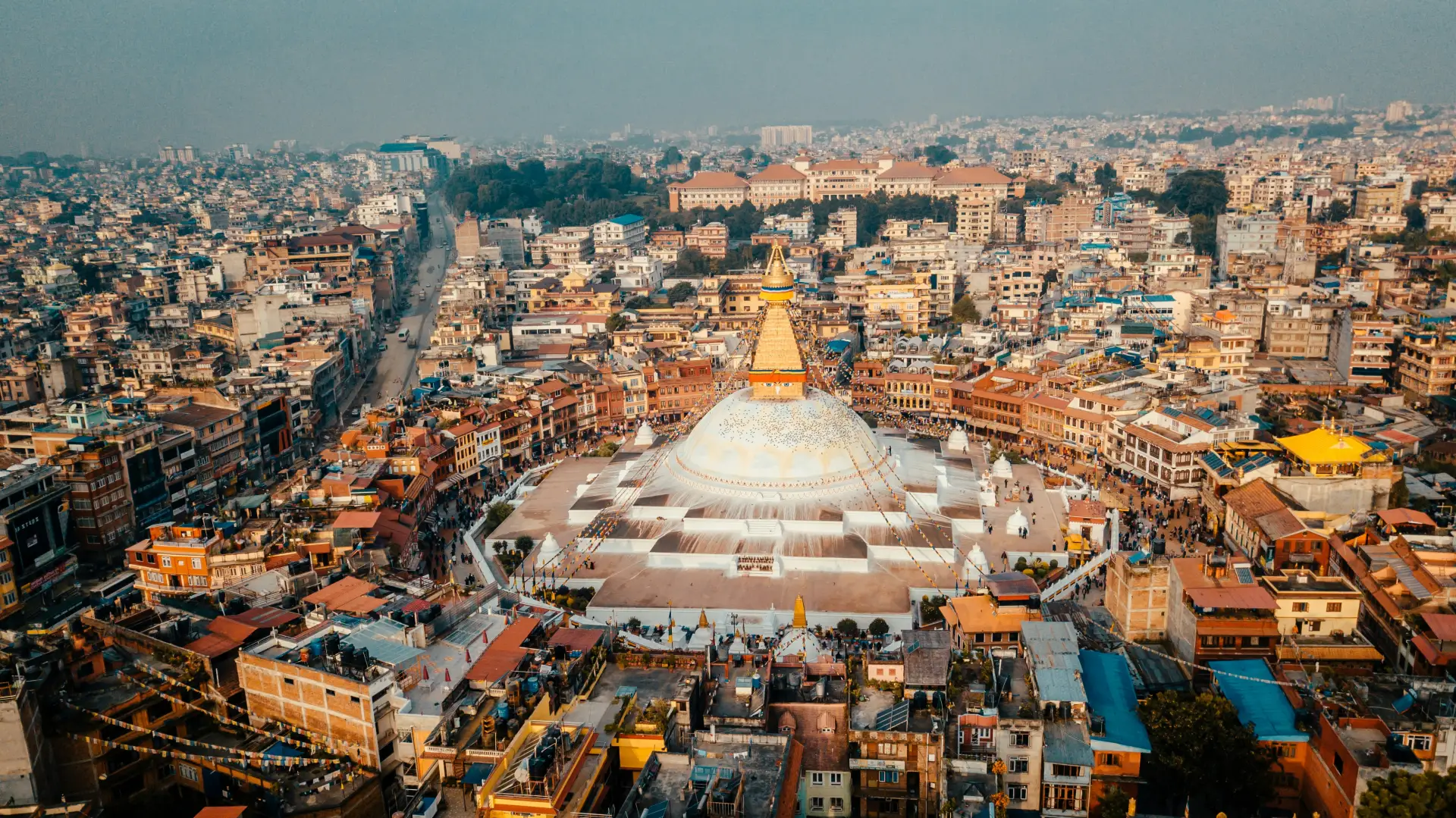
Kathmandu cluster
Why visit Kathmandu Durbar Square
It is one of the strongest introductions to Kathmandu's old-city density.
Palace areas, temples, courtyards, markets, and local streets sit close together.
A guide can make the site more meaningful without overwhelming you with dates.
It pairs well with Ason, Thamel, or Swayambhunath depending on your route.
Quick facts
- Difficulty
- Easy to moderate
- Nearby
- Ason, Thamel, Swayambhunath
- Good for
- Culture travelers, First-time visitors, Photographers, Guided-walk travelers, Old-city explorers
Visit flow
How to plan the stop
Start early before traffic, heat, and crowds build.
Use the square as an anchor, then continue into nearby lanes only if energy is good.
Consider a local guide for context, courtyards, and respectful movement.
Keep valuables close in market and festival crowds.
Finish with Thamel food, Ason market lanes, or Swayambhunath if visibility is good.
Old City Morning
Thamel → Ason → Kathmandu Durbar Square
A practical first heritage route.
Heritage And View
Kathmandu Durbar Square → Swayambhunath
Good when you want architecture and valley perspective.
Guided Texture Walk
Durbar Square → Courtyards → Market lanes
Best with a guide who can explain living culture.
Research-backed data
Verified visitor facts
Source: dibas4/discover-nepal-tourism-data/provinces/bagmati/districts/kathmandu.md. Operational details and fees remain time-sensitive.
Location and verification
- Municipality / area: Kathmandu Metropolitan City
- Coordinates: 27.703889, 85.308333
- UNESCO component coordinate
- Verified from UNESCO + Kathmandu Metropolitan City/Nepal Tourism Board sources
Entry and visitor context
- Source checked 2026-08-08: foreign nationals NPR 1,000; BIMSTEC/SAARC NPR 500; Nepalese and children below 10 free. Recheck before travel.
- No separate travel permit identified; site entrance fee applies.
- The square contains palace courtyards, temples and Kumari Ghar; some inner areas function as museums and individual access can differ.
Safety and etiquette
- • Crowds can be dense during festivals and market hours.
- • Watch uneven paving and vehicle movement near old lanes.
- • Ask before photographing people closely.
- • Use respectful clothing and behavior around active shrines.
Best time to visit
- Season
- Autumn, winter, and spring are most comfortable for walking.
- Time of day
- Morning is best for lighter crowds and better walking conditions.
- Avoid
- Avoid squeezing it between airport errands or long cross-city transfers.
- Caution
- Ticket rules, restoration areas, and access points can change.