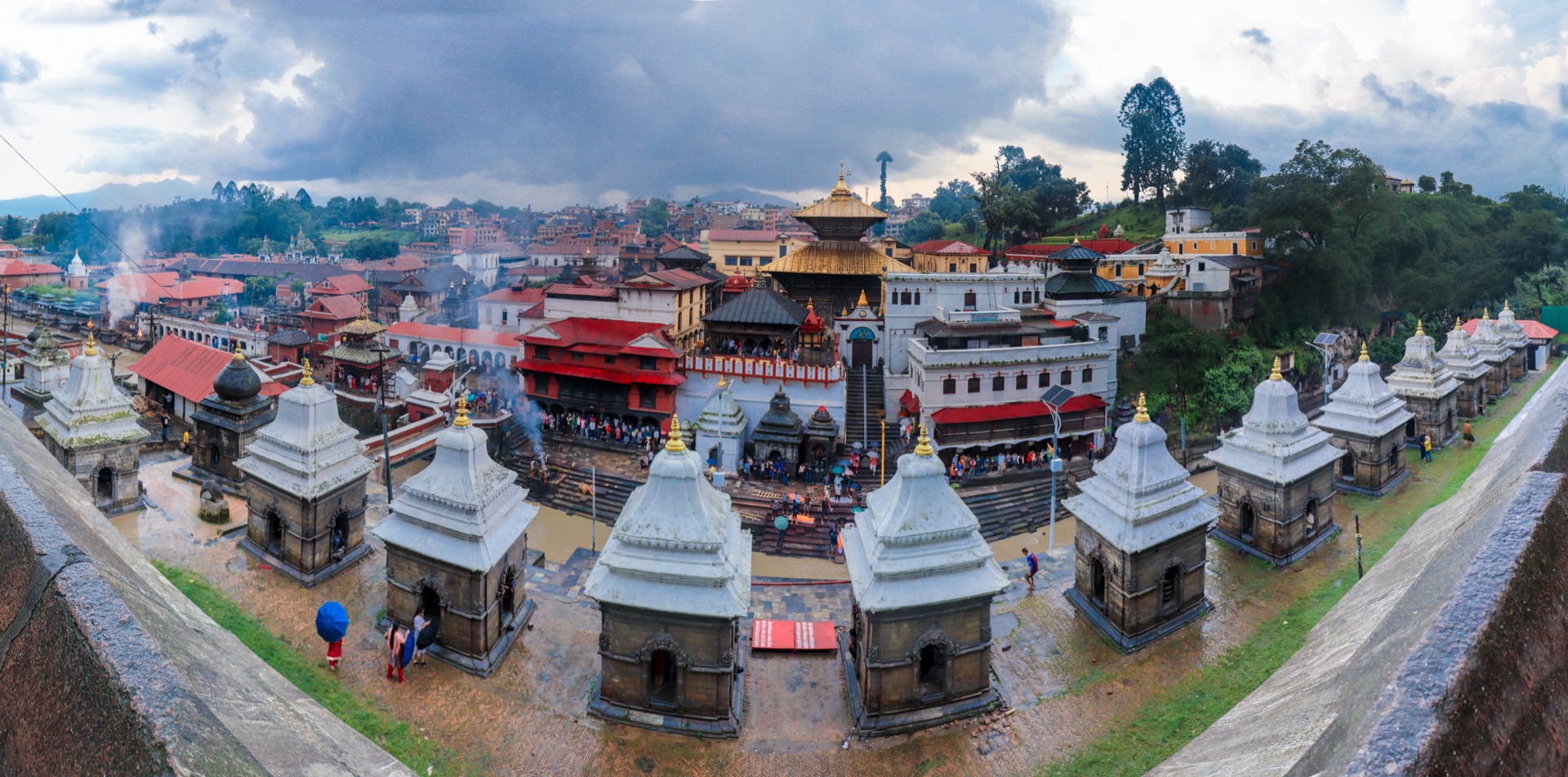
Kathmandu cluster
Why visit Pashupatinath Temple
It is one of Nepal's most important Hindu sacred areas.
The wider complex reveals living ritual, cremation ghats, sadhus, shrines, and riverbank movement.
A guide can help visitors understand etiquette without turning the visit into a confusing walk.
It pairs naturally with Boudhanath for a strong spiritual half day.
Quick facts
- Difficulty
- Easy to moderate
- Nearby
- Boudhanath, airport-side hotels
- Good for
- Culture seekers, Spiritual travelers, Guided-tour travelers, Photographers with restraint, First-time Kathmandu visitors
Visit flow
How to plan the stop
Arrive early or late afternoon and dress modestly.
Remember non-Hindus cannot enter the main temple sanctum.
Keep respectful distance around cremation areas and grieving families.
Use a guide if you want cultural context and better route flow.
Continue to Boudhanath afterward for a calmer circular walk.
East-Side Spiritual Route
Pashupatinath → Boudhanath
The most practical pairing with less backtracking.
Arrival-Side Route
Airport hotel → Pashupatinath → Boudhanath
Useful if staying near the airport or Boudha.
Guided Culture Morning
Pashupatinath → Guide walk → Boudhanath lunch
Best when you want meaning and etiquette handled carefully.
Research-backed data
Verified visitor facts
Source: dibas4/discover-nepal-tourism-data/provinces/bagmati/districts/kathmandu.md. Operational details and fees remain time-sensitive.
Location and verification
- Municipality / area: Kathmandu Metropolitan City, Bagmati River / Gaushala-Pashupati area
- Coordinates: 27.710523, 85.348840
- UNESCO component coordinate
- Verified from UNESCO + Nepal Tourism Board sources
Entry and visitor context
- Source checked 2026-08-08: foreign nationals NPR 1,000 per day/per entry; the checked NTB table lists Indian and Nepalese nationals as free. Recheck before travel.
- No separate travel permit identified; site entrance fee applies to tourists.
- Sacred Hindu pilgrimage complex on the Bagmati River about 5 km east of central Kathmandu.
- The main temple complex is open only to Hindus; non-Hindus can observe from terraces across the Bagmati River to the east.
- The checked NTB guidance prohibits photography in the main temple complex and restricts leather items inside the temple complex.
Safety and etiquette
- • Do not photograph cremation areas intrusively.
- • Respect restricted temple areas and local worshippers.
- • Watch steps and riverbank edges.
- • Avoid treating sadhus or mourners as photo props.
Best time to visit
- Season
- Year-round, with autumn and spring most comfortable for walking.
- Time of day
- Early morning has ritual movement; late afternoon has softer light.
- Avoid
- Avoid visiting when you are too rushed to move respectfully.
- Caution
- This is a sensitive living sacred site, not only a monument.