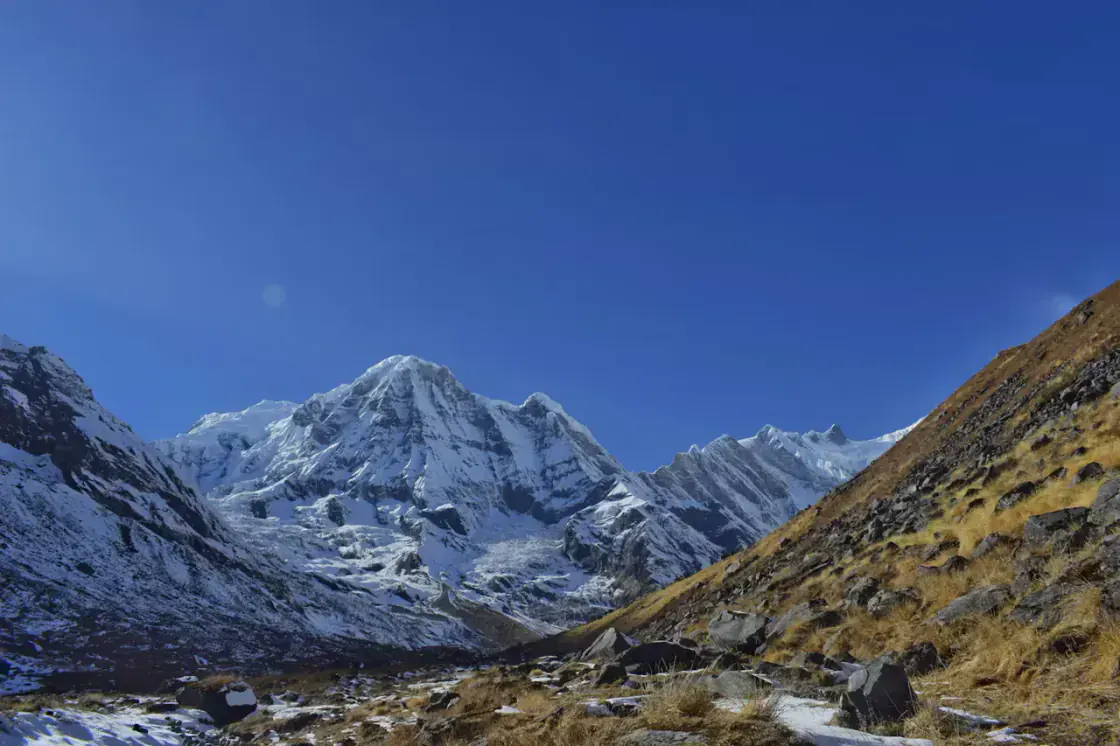
Annapurna mountain trekking trail with snow peaks in Nepal

Annapurna Region

Annapurna Base Camp Trek Guide

A classic tea-house trek from the Pokhara side into the Annapurna Sanctuary, with Gurung villages, forests, river valleys, and a close Himalayan amphitheater finish.

Region

Annapurna Region

Duration

7-11 days

Difficulty

Moderate to hard

Best season

Mar-May and Oct-Nov

Max altitude

4,130 m

Route overview

How the Annapurna Base Camp route usually flows.

Most travelers begin in Pokhara, drive toward the lower trailheads, and walk through villages such as Ghandruk, Chhomrong, Bamboo, Deurali, Machhapuchhre Base Camp, and Annapurna Base Camp.

The route climbs gradually but includes many stone steps and repeated ascents and descents, so pacing matters as much as raw fitness.

ABC works well as a first serious Nepal trek when you allow enough days, avoid rushing altitude gain, and keep a weather buffer.

Day-by-day itinerary

A practical starting itinerary.

Treat this as a planning frame, then adjust for weather, fitness, guide advice, and available lodges.

Day 1

1,780-2,012 m

Pokhara to Ghandruk or Jhinu area

Road transfer and first village walk

Start from Pokhara and enter the Annapurna foothills through a road-and-trail day.

Day 2

2,170 m

Trek to Chhomrong

Village paths and stone steps

Move through Gurung settlements and prepare for the deeper sanctuary route.

Day 3

2,310-2,600 m

Chhomrong to Bamboo or Dovan

Forest and river valley

Descend and climb through forested terrain where wet steps need care.

Day 4

3,200 m

Bamboo or Dovan to Deurali

Narrow valley ascent

Gain altitude steadily and watch weather, trail conditions, and energy.

Day 5

4,130 m

Deurali to Annapurna Base Camp

MBC and ABC

Enter the high sanctuary landscape and sleep at the base camp area if conditions are suitable.

Day 6

2,310 m

ABC to Bamboo

Return descent

Descend carefully; tired legs make stone steps slower than expected.

Day 7

1,780 m

Bamboo to Jhinu or roadhead

Hot spring side option

Return through villages with an optional Jhinu rest stop depending on route choice.

Day 8

822 m

Return to Pokhara

Walk and road transfer

Finish the trail and return to Pokhara for rest, laundry, and onward planning.

Permit Information

ACAP permit

Required for the Annapurna Conservation Area; carry printed copies and passport details.

TIMS or local trek registration

Confirm the latest trekking registration rule in Pokhara or Kathmandu before starting.

Cost Expectation

Budget independent style: USD 30-45 per day

Simple lodges, local meals, permits, and shared/local transport where possible.

Guided comfort style: USD 55-95 per day

Licensed guide or porter support, arranged rooms, transfers, and smoother logistics.

Permit and transfer buffer: USD 60-140+

Varies by routehead, season, group size, and current local transport.

Difficulty And Fitness

You need steady uphill stamina, comfort with long stair sections, and enough patience to keep a moderate pace. Prior multi-day hiking helps, but ABC is achievable for fit first-timers who do not rush.

Best Time To Go

October-November usually gives clear mountain views and busy lodges. March-April brings warmer days and rhododendron color. Monsoon can mean leeches, slippery trails, and clouded views.

Transport Access

Pokhara is the practical base. Travelers usually take a jeep, taxi, or bus toward Nayapul, Ghandruk, Kimche, Jhinu, or another current trailhead depending on road conditions.

Travel utility checklist

Annapurna Base Camp trekking essentials

Use this as the reusable trek checklist for permits, transport, cost ranges, altitude, emergency planning, and official references.

Last verified: 2026-07-09

Permit Information

ACAP permit

Required for the Annapurna Conservation Area; carry printed copies and passport details.

Confirm current requirements with official sources or a licensed trekking agency before departure.

TIMS or local trek registration

Confirm the latest trekking registration rule in Pokhara or Kathmandu before starting.

Confirm current requirements with official sources or a licensed trekking agency before departure.

Transport Options

Access

Pokhara is the practical base. Travelers usually take a jeep, taxi, or bus toward Nayapul, Ghandruk, Kimche, Jhinu, or another current trailhead depending on road conditions.

Estimated Costs

Budget independent style

USD 30-45 per day

Simple lodges, local meals, permits, and shared/local transport where possible.

Guided comfort style

USD 55-95 per day

Licensed guide or porter support, arranged rooms, transfers, and smoother logistics.

Permit and transfer buffer

USD 60-140+

Varies by routehead, season, group size, and current local transport.

Emergency, Hospital And Altitude

Max altitude

4,130 m

Fitness

You need steady uphill stamina, comfort with long stair sections, and enough patience to keep a moderate pace. Prior multi-day hiking helps, but ABC is achievable for fit first-timers who do not rush.

Hospital information

Identify the nearest health post, HRA aid post, or evacuation plan before starting high-altitude sections

ATM, Internet And SIM

Cash planning

Carry enough cash after leaving the gateway town; ATM reliability is not guaranteed on trail

Internet and SIM

Expect mobile data and lodge Wi-Fi to vary by valley, altitude, weather, and power availability

Weather And Seasonal Notes

Best season

Mar-May and Oct-Nov

Best time detail

October-November usually gives clear mountain views and busy lodges. March-April brings warmer days and rhododendron color. Monsoon can mean leeches, slippery trails, and clouded views.

Packing Tips

Core trek packing

Warm layers, rain shell, broken-in boots, sun protection, water treatment, headlamp, power bank, and offline permit copies

Safety notes

Do not treat 4,130 m as harmless; watch headache, nausea, dizziness, and unusual fatigue. Carry rain protection because the sanctuary can change weather quickly. Start early on longer days so you are not on stone steps after dark. Book or call ahead in peak season when lodge rooms can fill.

Nearby Places

Pokhara

Main arrival, gear, rest, and transport base for ABC.

Annapurna Region

Wider trekking region around ABC, Ghandruk, Mardi, and Poon Hill.

Ghandruk

Gurung village often used as an ABC entry or exit stop.

Mardi Region

Nearby ridge trek that pairs naturally with Annapurna planning.

Begnas Lake

Quiet Pokhara-side lake for rest days before or after trekking.

Travel warnings and verification notes

  • Permit, guide, and route rules can change; confirm before paying for a fixed plan.
  • Altitude illness can become serious. Do not ascend if symptoms worsen.

Safety notes

Build safety into the plan before the trail starts.

Do not treat 4,130 m as harmless; watch headache, nausea, dizziness, and unusual fatigue.

Carry rain protection because the sanctuary can change weather quickly.

Start early on longer days so you are not on stone steps after dark.

Book or call ahead in peak season when lodge rooms can fill.

Related places

Compare route options

Route planner

Connect Annapurna Base Camp with the rest of your Nepal route.

Use the planner to compare arrival bases, recovery days, and nearby destination pages before fixing your schedule.

Open route planner

Cookie choices

Essential storage keeps this choice. Analytics cookies only load if you accept them. Read the privacy policy.